If your business premises still runs on an ageing fuse board, you are carrying a risk that most owners only discover when something fails. Commercial electrical installations work harder than domestic ones — longer hours, heavier loads, and considerably more at stake when the power goes down. This guide covers when a commercial fuse board needs replacing, what the law expects of you, and what the work actually involves.
Fuse board, consumer unit or distribution board?
These terms get used interchangeably, which causes confusion when you are comparing quotes. In practice:
- Fuse board — the older, informal term, usually describing a unit with rewirable or cartridge fuses rather than circuit breakers.
- Consumer unit — the standard term for the main board in a domestic property.
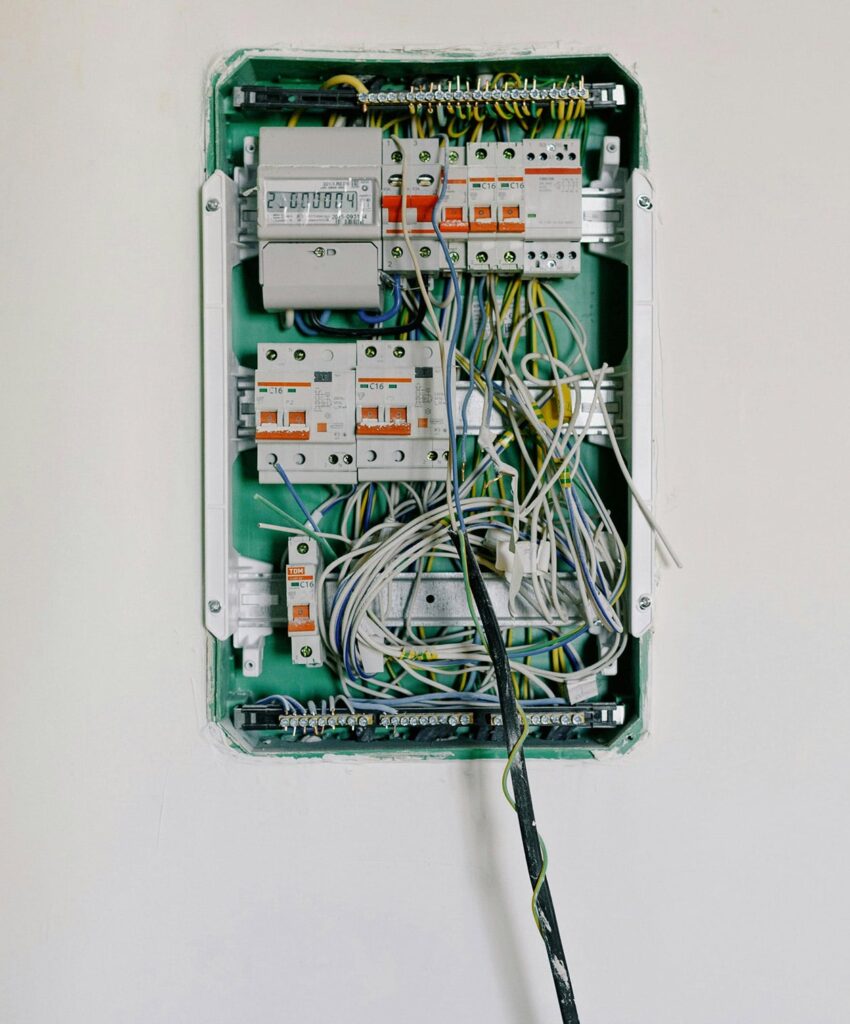
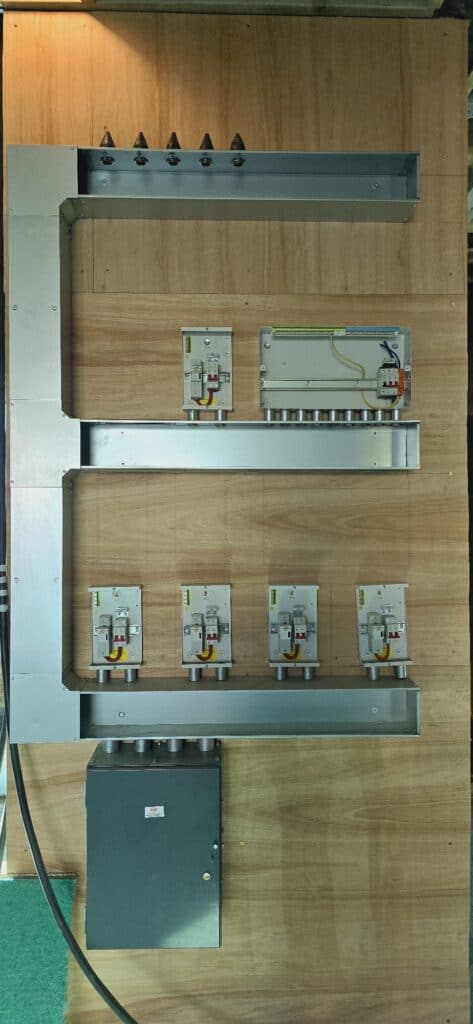
- Distribution board — the term used for commercial and industrial installations, where the supply is often three-phase and circuits may be split across several boards.
If you run a shop, office, restaurant or workshop, what you have is almost certainly a distribution board, even if everyone on site calls it the fuse box.
Signs your board needs replacing
- Rewirable fuses — if anyone is still replacing fuse wire, the board predates modern safety standards by decades.
- No RCD protection — without residual current devices there is nothing protecting staff from electric shock in the event of an earth fault.
- No spare ways — if every slot is occupied you cannot add circuits safely, and informal workarounds tend to appear instead.
- Repeated nuisance tripping — often a sign of circuits loaded well beyond their original design, which is common after a refit or a change of use.
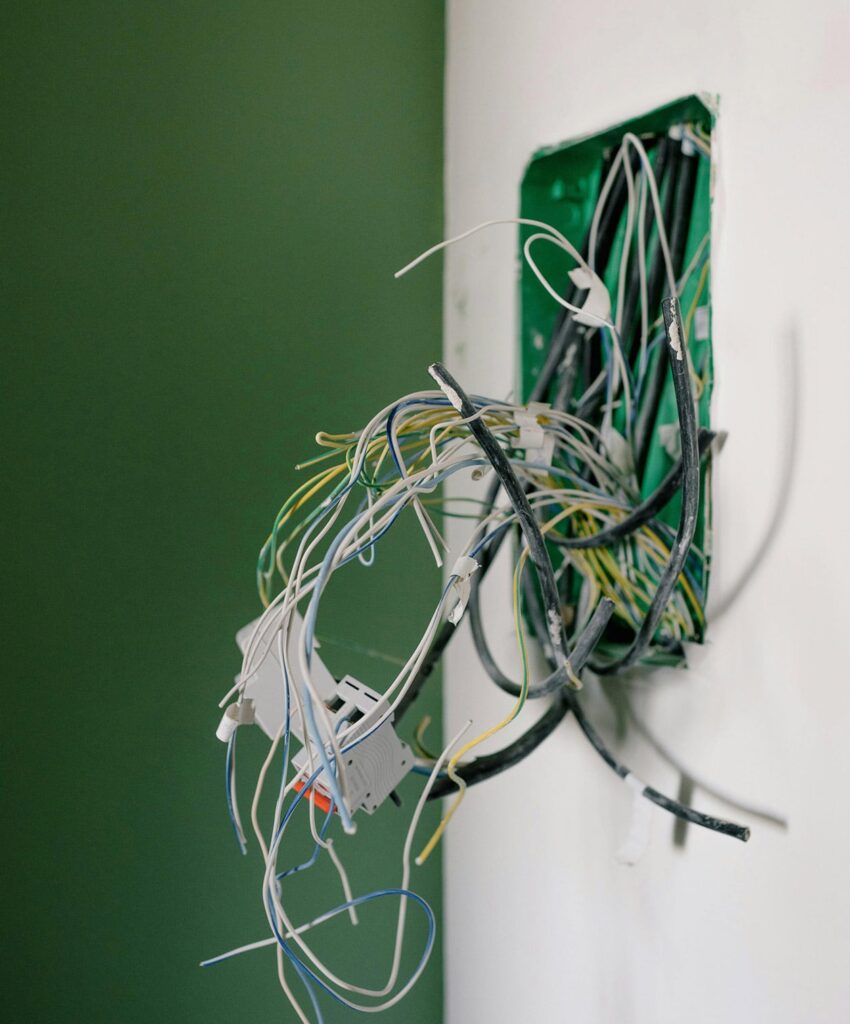
- Any sign of heat — scorching, discolouration or a burning smell around the board needs attention immediately. Loose connections are a leading cause of electrical fires in commercial premises.
- A failed inspection — if your last report returned C1 or C2 codes against the board, it is not in a compliant condition.
What the law actually requires
The Electricity at Work Regulations 1989 place a duty on employers, landlords and anyone else in control of a commercial premises to maintain electrical systems, so far as is reasonably practicable, to prevent danger. The regulations deliberately do not prescribe a fixed inspection interval. What they require is that you can demonstrate the system is being maintained in a safe condition.
In practice that evidence comes from periodic inspection and testing, which produces an Electrical Installation Condition Report. For most commercial premises the recommended maximum interval is five years, but the appropriate interval depends on the type of premises, how it is used and the environment it sits in. Industrial sites, and anywhere exposed to damp, dust or heavy wear, are commonly inspected more frequently.
One point worth clearing up: Part P of the Building Regulations applies to dwellings only. Commercial work is not notifiable under Part P, but it must still comply with BS 7671, the national wiring standard.
What has changed in the wiring regulations
If your board is more than ten years old, it predates several meaningful changes brought in by the 18th Edition of BS 7671 and its amendments:
- Surge protection — Amendment 2 means surge protective devices should now be fitted in most installations unless a documented risk assessment concludes otherwise. For premises full of tills, servers, card terminals and refrigeration, that matters commercially as much as it does for safety.
- Individual RCBOs rather than shared RCDs — older boards often sit several circuits behind a single RCD, so one fault takes out half the premises. Individual RCBOs isolate only the faulty circuit, which for a business is the difference between one dead socket and shutting the doors.
- Arc fault detection — AFDDs are required for socket circuits up to 32A in certain higher-risk residential premises, and recommended more widely. They detect the kind of arcing that precedes a fire, which conventional protective devices will not pick up.
What the work involves
A straightforward single-phase board change in a small commercial unit is usually a day’s work. Three-phase boards, or installations where circuits have to be identified and re-labelled first, take longer.
The sequence is: isolate the supply, test and record the existing circuits, fit the new board, terminate and test each circuit, then certify. You receive an Electrical Installation Certificate on completion — keep it somewhere safe, because that is the document demonstrating the work was done to standard.
Downtime is the part most businesses actually care about. The supply has to be off while the board is changed, so the practical question is when, not whether. Most commercial board replacements we carry out happen outside trading hours for exactly that reason.
Choosing a contractor
Check that whoever you appoint is registered with a recognised scheme and is competent for commercial work specifically — domestic experience does not automatically transfer to three-phase installations. Ask to see evidence of registration, confirm the quote includes certification, and ask what happens if further remedial work is uncovered once the board is off.
Be cautious of any quote given without someone looking at the installation first. Boards are rarely a like-for-like swap: the existing cabling, earthing and bonding all have to be assessed before anyone can tell you honestly what the job involves.
Getting it assessed
Pro D Electrical is NAPIT registered and JIB Gold Card qualified, and we carry out commercial distribution board replacements across North and Central London, including Camden and Islington. If your board shows any of the signs above — or your last EICR flagged it — we can assess it and tell you plainly whether it needs replacing or whether remedial work will do.
Call 07562334243 for a quote, see how we approach consumer unit and board upgrades, or look at an example of a commercial distribution board installation we completed.